







Why Northeast Indiana’s Climate Makes Safe Maintenance More Urgent
Indiana weather puts mechanical equipment through its paces. Summer humidity seeps into a safe’s interior, corroding internal lock components and degrading electronic keypads. Winter brings dry air, rapid temperature drops, and cold that causes metal to contract, bolts to bind, and lubricants to stiffen. A safe that opens perfectly in July may feel sluggish by February if the lock mechanism has not been maintained.
Many Northeast Indiana homeowners bolt their safes to a concrete basement floor or an exterior wall, where temperature and moisture fluctuations are most dramatic. These locations are smart for security but increase environmental stress on the safe’s components. We can assess whether your installation location is contributing to accelerated wear and recommend steps to reduce that impact.
A Practical Safe Maintenance Schedule Northeast Indiana Owners Can Follow
Most safe manufacturers recommend a professional service inspection every one to three years for residential safes under normal use. Commercial safes that see daily access generally benefit from annual service given the higher cycle count on the lock and bolt mechanism. Gun safes in active households fall somewhere in between, with many owners finding a two-year interval keeps everything running smoothly.
Between professional visits, owners can take a few simple steps on their own:
- Keep the exterior clean and dry after exposure to humidity or temperature changes
- Monitor for any stiffness in the handle or dial during regular use
- Test the electronic keypad regularly to catch early response issues
- Replace batteries annually, even before a low-battery warning appears
If the lock starts feeling inconsistent or an electronic keypad begins misfiring, those are signals to call a professional before the problem becomes a full lockout. We handle safe unlocking and lock repairs across the region, and getting a technician involved early almost always prevents more complicated and costly work later.
Signs Your Safe Needs Service Before the Scheduled Date
A regular schedule is a smart baseline, but some situations call for attention outside the normal cycle. Watch for these warning signs:
- A dial that feels gritty or catches between numbers, suggesting dried lubricant or debris in the mechanism
- An electronic keypad that requires multiple attempts to accept a correct combination
- A handle that has become noticeably harder to turn over a season
- Any drop, impact, or move that could have shifted internal bolt work or relocker alignment
One customer contacted us after their home gun safe’s handle had become harder to turn over the course of a winter. A technician found that the bolt mechanism lubricant had thickened from the cold and that one relocker spring was beginning to show wear. The safe was serviced and back to smooth operation the same visit, without the customer ever facing a full lockout. We also handle safe installation, combination changes, and electronic keypad replacement, so any concern after a move or impact can be addressed in a single visit.
Electronic vs. Mechanical Safe Locks: Different Needs, Same Commitment
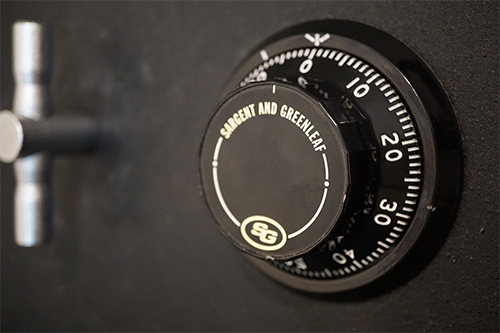
The type of lock your safe uses affects what service looks like in practice. Mechanical dial locks are remarkably durable but still benefit from periodic cleaning and lubrication of the wheel pack and bolt mechanism. A well-maintained mechanical lock can last decades, but one that runs dry will wear out the tumblers unevenly before it eventually fails.
Electronic keypads are faster and more convenient, but they introduce batteries, circuit boards, and solenoid-driven bolt motors that mechanical locks do not have. Understanding the ongoing maintenance each type requires is part of choosing the right safe lock type for long-term reliability. Keypad replacement and reprogramming is a straightforward job for a licensed technician but is not a DIY task without risking damage to the locking mechanism.
What to Expect from a Professional Safe Service Visit
A professional service call covers more ground than most owners expect. We will test the lock under normal operating conditions, inspect the bolt work and relockers for wear, clean and re-lubricate moving components, check door seal integrity on fireproof models, and verify that the keypad or dial is performing within spec. If anything needs replacement, we walk you through the options on the spot.
All Around Locksmiths has been serving Fort Wayne and the surrounding Northeast Indiana counties including Allen, DeKalb, Noble, Whitley, Huntington, Wells, and Adams since 1999. We are a SAVTA member, veteran-owned, BBB A+ rated, and verified by the 1-800-Unlocks Fair Trade Locksmith Directory. Service visits are mobile, so a technician comes to your location rather than requiring you to move a bolted-down unit.
If your safe may be overdue for service or you want help building a maintenance schedule that fits your unit and usage, contact us today and we will help you figure out the right next step. You can also read more about how environmental factors damage safes over time to better understand what your safe is up against in a Northeast Indiana climate.