







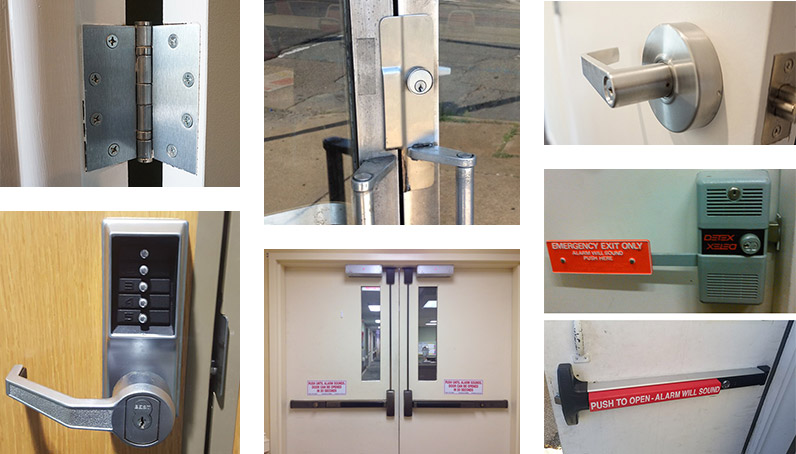
What Panic Bars Are and How They Work on Commercial Exits
A panic bar, also called a crash bar or push bar, is a horizontal bar mounted across an exit door that releases the latch when someone pushes against it from the inside. No turning a knob, no pulling a handle, and no fumbling with a key. A person moving quickly toward an exit in a crowd will naturally push forward, and the bar releases the door in that same motion. That design is what makes panic bars so effective during high-stress situations.
The hardware spans roughly two-thirds of the door width and connects to a latch mechanism that disengages under relatively light pressure. Most units comply with NFPA 101, the Life Safety Code, which governs egress requirements for commercial and assembly occupancies. Quality units are also rated for cycle life, meaning they are tested to function correctly through hundreds of thousands of operations.
Which Commercial Buildings Require Panic Bars
Not every commercial door requires panic hardware, but many do. The rules depend on occupancy type, building use, and occupant load. Indiana building and fire safety codes align closely with the International Building Code and NFPA 101. Generally, any exit door serving an area with an occupant load of 50 or more people requires panic hardware. Common occupancies that typically fall into this category include:
- Assembly spaces, theaters, and event venues
- Retail stores and restaurants
- Educational and medical buildings
- Bars and high-traffic entertainment venues
One Fort Wayne business owner contacted us after a routine fire inspection flagged their rear exit doors for lacking proper egress hardware. The doors had standard commercial levers, but the occupant load required panic bars. A technician visited the site, assessed the current hardware, and handled the installation so the business passed re-inspection without delay. Getting ahead of that requirement is always the smarter path.
Panic Bars and Commercial Door Repair Work Together for Exit Safety
A panic bar is only as reliable as the door and frame it is mounted on. A misaligned door, a worn frame, a failing closer, or a damaged strike plate can all prevent a panic bar from functioning correctly even if the bar itself is in good condition. That is why exit safety depends on the full assembly working together under pressure.
Businesses that invest in commercial door repair alongside panic bar installation get a much more dependable exit. When we assess an exit door, we check the door, frame, hinges, closer, and threshold as a complete system, not just the hardware being replaced.
Types of Panic Hardware and Choosing the Right One
Panic bars come in several configurations depending on the door type, security requirements, and access control setup. The most common options include:
- Rim-mounted devices, which are surface-mounted to the door face and work for most standard exits
- Mortise-style devices, which integrate into the door body and suit high-security applications
- Vertical rod devices, which extend to the top and bottom of the door and are common on wide or double-door assemblies
Some panic bars include dogging capability, which holds the latch in the retracted position so the door functions as a push-pull door during normal business hours. Others connect to access control systems that log exit events, trigger alarms, or restrict re-entry from the outside. Businesses that need to monitor egress points often benefit from panic hardware that integrates with their existing setup rather than treating the exit door as an afterthought.
Maintaining Panic Bar Hardware to Keep Exits Code-Compliant
Panic bars require periodic maintenance to stay reliable. The latch mechanism, the push bar, the mounting fasteners, and the connecting rods on vertical rod devices all see significant wear in high-traffic environments. A bar that requires excessive force to operate, sticks, or fails to fully retract the latch is a liability from both a safety and compliance standpoint.
Our team handles commercial lock repair and replacement across Fort Wayne and Northeast Indiana, and panic bar service is part of that work. If a unit is worn beyond adjustment, replacement is usually more cost-effective than repeated repairs. We stock hardware that meets commercial grade requirements and install it to spec so there are no surprises at the next inspection. All Around Locksmiths backs new part installations with a 45-day warranty from the date of service.
Pairing panic bar maintenance with a review of your master key system is a practical way to make sure every access point in the facility is working as it should.
A Fort Wayne and Northeast Indiana Commercial Locksmith You Can Call Today
All Around Locksmiths has been serving commercial clients across Fort Wayne, Allen County, DeKalb County, Whitley County, and the broader Northeast Indiana region since 1999. We are locally owned, veteran-owned, licensed, BBB A+ rated, and verified through the 1-800-Unlocks Fair Trade Locksmith Directory. Our mobile team arrives with the right hardware and handles the work correctly the first time. Service is available 24 hours a day, seven days a week, so a door problem after hours does not have to wait until morning.
If your commercial exits need attention, contact us today for help to request service or get a free quote. A licensed technician will assess your exit doors and recommend the right hardware for your occupancy, your doors, and your budget.