


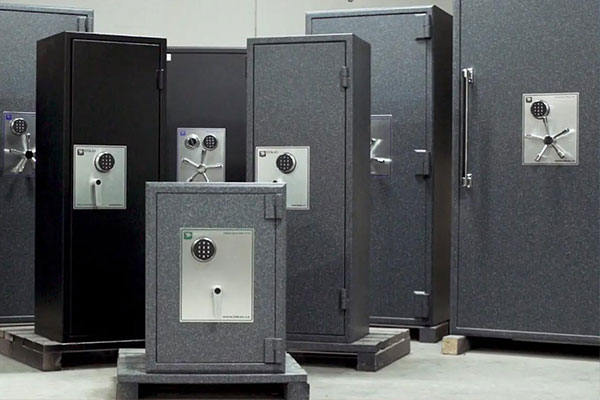
How Mechanical Safe Locks Work and Where They Shine
Mechanical combination locks use a series of internal wheel packs and a drive cam to align notches and release the bolt mechanism. There are no batteries, no circuit boards, and no software. You turn the dial through a sequence of numbers and the lock either opens or it does not. A quality mechanical lock from a manufacturer rated by Underwriters Laboratories can last decades with minimal maintenance beyond an occasional check of the drive cam and spindle.
Mechanical locks are well suited for situations where reliability without any power source matters most. Key advantages include:
- No batteries to replace or monitor
- No circuit boards that can fail due to moisture or age
- Consistent performance across extreme temperatures
- Decades of reliable use with minimal upkeep
The trade-off is speed. Opening a dial lock correctly takes practice, and a single wrong turn means starting the sequence over. For homeowners who access their safe infrequently, that is rarely a problem. For businesses pulling items from a safe multiple times each day, the pace can feel slow.
How Electronic Safe Locks Work and What Sets Them Apart
Electronic safe locks use a keypad, touchscreen, or biometric reader to authenticate access and then trigger a motorized bolt electronically. Most run on a nine-volt battery located inside the door or behind the keypad. High-quality electronic locks rated to UL Group 1 or Group 2 specifications offer quick, repeatable access in just a few button presses. For households with multiple authorized users, most electronic locks allow programming of several unique codes without a locksmith visit every time access changes.
The main concern people raise is battery failure. Most quality units give low-battery warnings well in advance and include an external battery terminal so you can supply power from outside the door even if the internal battery is fully dead. The deeper vulnerability is the electronics themselves. Moisture intrusion, manufacturing defects, and age can cause a keypad to fail in ways a mechanical dial cannot. That is a reason to buy quality and to have a licensed safe technician handle installation and any future service.
Mechanical vs. Electronic Safe Locks: Key Differences Side by Side
When comparing both lock types directly, a few categories matter most for long-term owners:
- Speed of access strongly favors electronic locks
- Durability in damp or dusty environments often favors mechanical locks
- Audit trail capability, a record of every access event, is only available on electronic units
- Combination changes on a mechanical lock require a locksmith, while most electronic locks allow owner-managed code changes
One customer brought us a gun safe that had been in a basement for several years. The electronic keypad had stopped responding entirely, and the owner had no backup key. Our technician opened the safe and helped the customer weigh whether an electronic replacement or a mechanical conversion made more sense given the storage environment. That kind of evaluation is exactly where an experienced technician adds value that a product spec sheet cannot.
Which Lock Type Fits Your Situation
Mechanical locks are often the better fit for long-term storage safes in homes, especially those kept in garages, basements, or outbuildings where temperature swings and humidity are real factors. Northeast Indiana winters are hard on electronics, and a garage safe that drops below freezing repeatedly puts more stress on battery-powered components than most owners expect. If you rarely open the safe and want a lock that works without any upkeep, a quality mechanical dial is a strong choice.
Electronic locks tend to suit daily-use safes in climate-controlled spaces and commercial environments where quick access and multiple user codes are priorities. A retail business using a drop safe, an office storing petty cash, or a homeowner who wants the convenience of a PIN rather than a dial sequence will generally find electronic locks serve them better. Our team also handles access control systems for commercial clients who want that same kind of accountability across all their secured points of entry.
Getting Professional Help With Your Safe Lock Decision and Service
Choosing between mechanical and electronic safe locks is not purely a matter of personal preference. The right answer depends on the safe model, where it lives, how often it gets opened, who needs access, and what you are protecting. The Safe and Vault Technicians Association, of which All Around Locksmiths is a member, sets professional standards for exactly this kind of service work.
We are locally owned, veteran-owned, and BBB A+ rated. Whether your current lock is acting up, you are choosing a lock for a new safe, or you want a technician to evaluate the right fit for your home or business, our team is ready to help. Contact us today to request service or get a free quote.